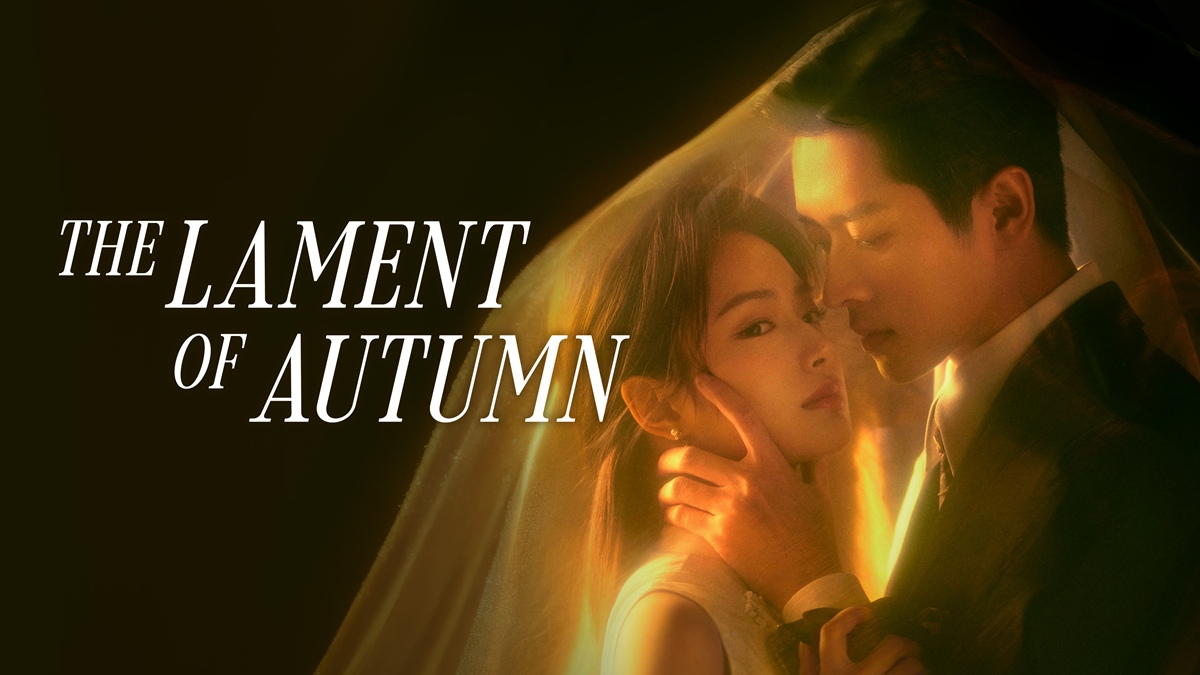
The Lament of Autumn (2026): A Beautiful but Toxic Love Story?
What happens when a ruthless young military commander becomes fascinated by the one woman who refuses to surrender to his authority? The Lament of Autumn (玉簟秋), starring Cheng Lei and Xu Ruohan, explores this dangerous attraction against the turbulent backdrop of 1920s Republican China. Premiering on October 12, 2026, on Hunan TV and Mango TV, the historical romance blends political intrigue, class inequality, obsessive love, and wartime sacrifice. Directed by Kuk Kok-leung, Guo Hao, and Wang Hui, the drama adapts Ling Xi’s novel of the same name.
In this The Lament of Autumn C-drama review, we examine whether the electrifying tension between Yu Changxuan and Ye Pingjun is enough to overcome the show’s controversial characterization and occasionally questionable storytelling. Our The Lament of Autumn C-drama review also explores the sharply divided early reactions on Douban, where some viewers are captivated by Cheng Lei’s unpredictable young marshal while others question the heroine’s decisions and the drama’s treatment of historical realism.
With its lavish Republican-era costumes, complicated power dynamics, and emotionally charged romance, The Lament of Autumn promises a sweeping story of love and survival. But its greatest attraction may also be its biggest weakness: a romance built on an extraordinary imbalance of power.
📌 Drama Details
- Title: The Lament of Autumn
- Chinese Title: 玉簟秋 (Yu Dian Qiu)
- Country: China
- Genre: Historical Romance, Republican-Era Drama, Political Intrigue, Melodrama
- Episodes: 40 episodes in several listings; Mango TV currently lists 38
- Aired: October 12, 2026 – ongoing
- Broadcast Network: Hunan TV
- Streaming Platform: Mango TV
- Lead Cast: Cheng Lei (Ryan Cheng), Xu Ruohan
- Setting: 1920s Republican China
📖 The Story: The Lament of Autumn Explores Obsession, Betrayal and Love During Wartime
In a country divided by warlords and political ambition, love is rarely a simple matter of personal choice.
Yu Changxuan (Cheng Lei) is a privileged young military commander whose seemingly reckless behavior conceals a calculating and ambitious mind. He enjoys the freedom that comes with power, but beneath his carefree reputation lies a man capable of navigating dangerous political conflicts.
Ye Pingjun (Xu Ruohan), meanwhile, inhabits a very different world. An impoverished student struggling to pay for her seriously ill mother’s medical treatment, she has little protection against the wealthy and powerful people surrounding her.
Their lives collide when Pingjun becomes entangled in an assassination attempt involving Changxuan. Wrongfully suspected, she faces the terrifying possibility of being destroyed by an accusation she cannot easily disprove.
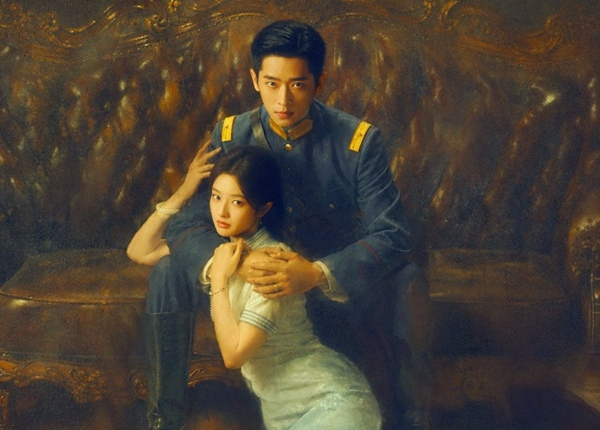
Rather than submitting to her circumstances, Pingjun enters into a dangerous agreement with Changxuan: she must identify the real culprit within ten days. What begins as a struggle for survival gradually becomes a complicated emotional battle.
Changxuan uses their arrangement as an opportunity to pursue Pingjun, while also concealing his own political and military plans. Pingjun, however, is unwilling to become another possession of a powerful man.
The more she resists, the more determined he becomes. Their relationship develops through confrontations, negotiations, moments of unexpected vulnerability, and a growing attraction neither can easily control.
Yet the world surrounding them is becoming increasingly unstable. Political conspiracies, family rivalries, and competing loyalties threaten to transform their personal conflict into something far more devastating.
The Ten-Day Agreement: Romance or Psychological Warfare?
One of the drama’s most effective early storytelling devices is the ten-day agreement.
On the surface, it is a straightforward mystery: Pingjun must prove her innocence before time runs out. Beneath that premise, however, the arrangement becomes a test of control.
Changxuan possesses wealth, military influence, and the ability to determine the consequences of Pingjun’s actions. She possesses intelligence, determination, and an unwillingness to accept his authority without question.
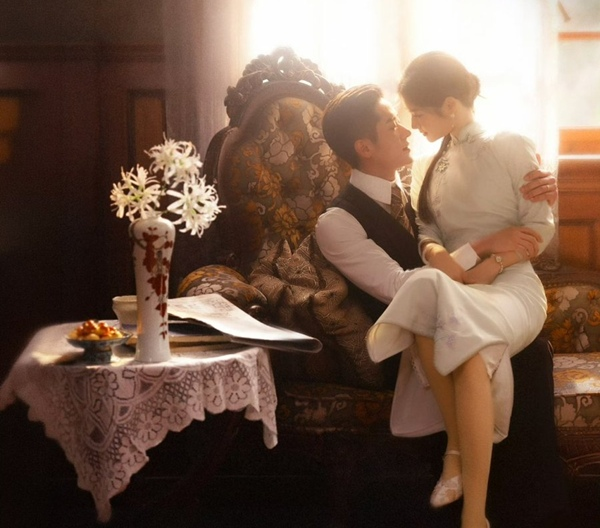
The imbalance makes their encounters uncomfortable at times, but it also generates the tension that attracts many viewers to intense Republican-era romances.
Every apparent concession becomes another negotiation. When Pingjun retreats, Changxuan often advances. When he attempts to dominate a conversation, she searches for a way to regain control.
This dynamic is particularly evident in the birthday-party interactions highlighted by early Douban viewers, who praised the tension beneath the characters’ supposed cooperation.
The central question is whether the drama can eventually transform this struggle for control into a believable relationship based on mutual respect.
Attraction alone is not the same as trust, and the story will need to recognize that distinction if its romance is to become genuinely moving.
Love, Duty and the Shadow of War
Although the early episodes emphasize romantic tension, the larger story extends beyond the relationship between Changxuan and Pingjun.
The narrative introduces military rivalries, political maneuvering, and characters whose personal ambitions are inseparable from the fate of the country.
Changxuan’s outwardly irresponsible image is particularly important here. His behavior is not necessarily evidence that he lacks purpose. Instead, it may function as a disguise that allows him to pursue military objectives while others underestimate him.
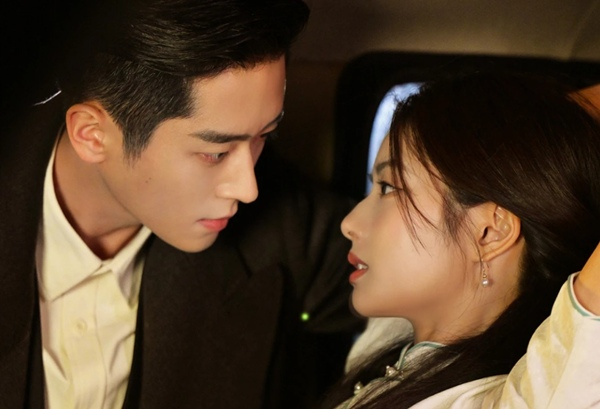
As the story develops, Jiang Xueting’s return and Tao Ziyi’s involvement complicate the central relationship. The official synopsis also points toward forced marriage, devastating personal loss, separation, and an eventual reunion amid war.
These developments suggest that the series aims to evolve from an intense romantic power struggle into a broader story about sacrifice, political conviction, and national responsibility.
Whether the transition feels organic will be essential to the drama’s success.
🎭 The Cast & Production
Cheng Lei as Yu Changxuan
Cheng Lei plays Yu Changxuan, a young marshal whose charm is inseparable from his dangerous unpredictability.
Changxuan is not presented as a conventional romantic hero. He is arrogant, provocative, and accustomed to getting what he wants. His interactions with Pingjun frequently reveal a man who treats emotional resistance as another challenge to overcome.
Yet the character also possesses intelligence and strategic discipline.
This contradiction gives Cheng Lei an opportunity to move between playful arrogance and commanding authority. In the early episodes, his seemingly frivolous behavior creates an impression of recklessness, while his military responsibilities gradually reveal a more calculating personality.
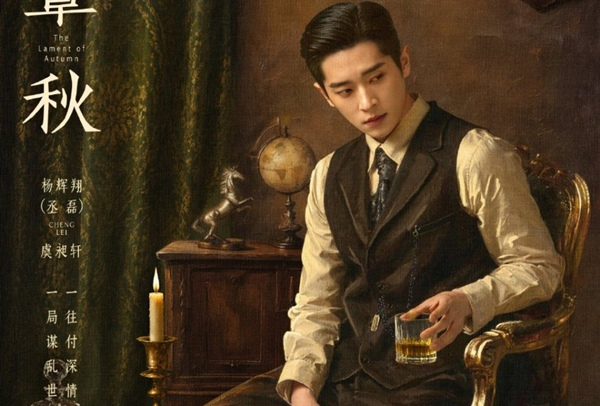
Fans familiar with Cheng Lei’s work in My Journey to You will recognize his ability to portray guarded, morally complicated men. However, Changxuan demands a different kind of performance: more flamboyant, more confrontational, and often deliberately excessive.
His character is designed to dominate the screen, and that is precisely why reactions have been divided.
Some Douban reviewers praise the contrast between his irresponsible public image and his strategic abilities. One October 13 review particularly admired his assumption of military command and his efforts to restore discipline.
Others find his early characterization too aggressive or theatrical.
Both responses are understandable. Changxuan’s intensity is central to the drama’s appeal, but it can also make his romantic behavior difficult to sympathize with.
Our take: Cheng Lei is one of the show’s strongest attractions, particularly when Changxuan’s military intelligence becomes visible beneath his deliberately provocative personality. The challenge will be ensuring that the character develops beyond an endlessly dominant romantic archetype.
Cheng Lei’s transformation becomes even more interesting when compared to his performance as Mo Xiuyao in The First Jasmine, where he starred opposite Bai Lu. While Mo Xiuyao concealed his ambitions behind quiet restraint and calculated patience, Yu Changxuan is far more provocative, unpredictable, and openly commanding. Both characters are skilled strategists, but their approaches to power and romance could hardly be more different. For a closer look at his previous performance, read our The First Jasmine review, where we explore his chemistry with Bai Lu and his portrayal of a mysterious, politically ambitious prince.
Xu Ruohan as Ye Pingjun
Xu Ruohan portrays Ye Pingjun, an intelligent but financially vulnerable student whose life is transformed by her encounter with Changxuan.
Unlike the passive heroines sometimes found in traditional melodramas, Pingjun refuses to accept injustice simply because the person confronting her holds greater social power.
She is resourceful, outspoken, and determined to protect her dignity.
Her characterization has attracted positive attention from some Douban viewers. One early commenter specifically praised the contrast between her disadvantaged circumstances and her practical survival instincts, arguing that she is far from a helpless heroine.
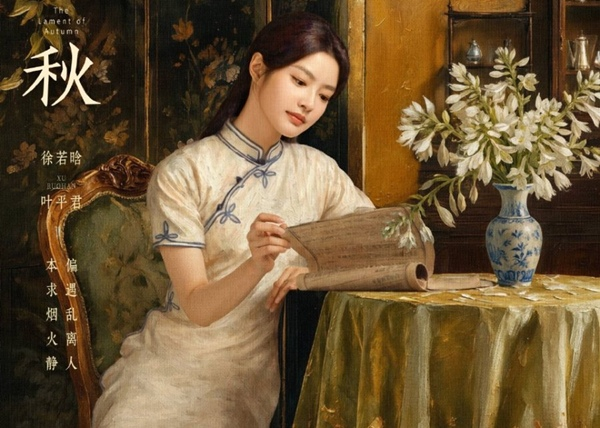
This independence provides a necessary counterweight to Changxuan’s domineering personality.
However, it also exposes a significant weakness in the writing.
Pingjun’s bravery occasionally appears disconnected from the danger surrounding her. Given the rigid class divisions and political violence of the period, confronting powerful military figures should carry consequences that the story cannot simply ignore.
Some early Douban reviews question how a poor student can repeatedly challenge influential families without sufficiently considering the danger to herself or her sick mother.
The issue is not that Pingjun should be submissive. Rather, her resistance needs to emerge from believable decisions, risks, and survival strategies.
Xu Ruohan, known for romantic dramas including The Best Thing, brings an approachable emotional quality to the role. Her challenge is to make Pingjun’s courage feel like a product of experience and intelligence rather than convenient plot protection.
Our take: Pingjun has the foundations of a compelling heroine, but the screenplay must work harder to make her decisions convincing.
🎬 The Verdict
👍 The Praise: Explosive Chemistry, a Complicated Male Lead and Nostalgic Atmosphere
The strongest element of The Lament of Autumn is the tension between its two protagonists.
Changxuan and Pingjun do not begin their relationship with mutual understanding. Instead, their interactions are shaped by suspicion, unequal power, and an attraction neither is prepared to acknowledge openly.
This creates an addictive push-and-pull dynamic for viewers who enjoy emotionally intense romance.
Several early Douban comments highlight precisely this quality. One viewer praised the excitement of watching Pingjun resist while Changxuan became increasingly determined to pursue her. Another singled out the birthday-party scenes for their underlying romantic tension.
The opening setting also received positive attention. A Douban commenter admired how the Xiangxi restaurant, its glamorous atmosphere, and Changxuan’s seemingly carefree persona established the characters and dramatic tone almost immediately.
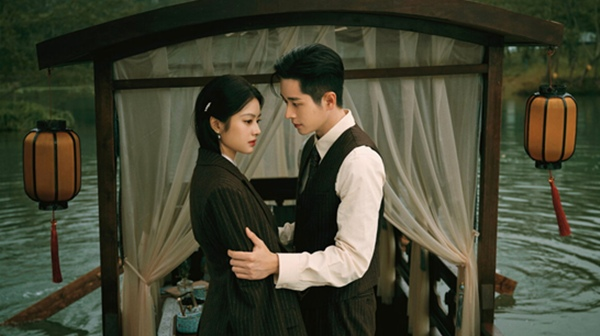
Cheng Lei’s performance has generated particular enthusiasm among viewers attracted to morally ambiguous male leads. Some reviewers argue that Changxuan becomes more compelling once his military competence and political intelligence are revealed.
The production’s nostalgic atmosphere is another advantage.
For audiences who enjoy grand Republican-era melodramas, the combination of military uniforms, luxurious interiors, forbidden attraction, and political turmoil delivers many of the genre’s familiar pleasures.
What works best so far:
- Cheng Lei’s charismatic and unpredictable young marshal.
- The charged relationship between two characters with radically different social positions.
- An intriguing ten-day mystery that gives the early romance a concrete dramatic purpose.
- Attractive Republican-era styling and elaborate interiors.
- A broader political story that could eventually add substance to the romantic conflict.
👎 The Critique: Questionable Logic, Unequal Power and Divisive Characterization
Despite its strong romantic hook, The Lament of Autumn has already attracted substantial criticism.
The most persistent concern in the supplied early Douban reviews is the logic behind Ye Pingjun’s decisions.
One October 14 reviewer questioned how an impoverished student could attend the same school as a wealthy bank executive’s daughter while repeatedly confronting influential people without appearing sufficiently concerned about the consequences.
Another criticized the ten-day investigation arrangement, arguing that Pingjun’s refusal to rely on Changxuan’s military resources feels unnecessarily contrived.
These complaints point toward a broader storytelling problem: the drama sometimes appears to prioritize dramatic confrontations over the practical realities of its historical setting.
The romantic power imbalance is another potential obstacle.
Changxuan’s pursuit of Pingjun may be exciting within the conventions of melodrama, but the story needs to distinguish emotional intensity from genuine romantic development.
A relationship in which one person controls the other’s safety and future cannot become convincing simply through repeated displays of possessiveness.
The screenplay must eventually give Pingjun meaningful choices and allow Changxuan to demonstrate respect for her autonomy.
Supporting-character development has also been criticized.
Some Douban reviewers argue that the male lead receives significantly more psychological and political complexity than the heroine, whose background is initially defined by poverty, illness in the family, and mistreatment.
Others have questioned the dialogue and characterization of secondary female characters.
These reactions do not represent a settled audience consensus, and they should not be mistaken for an official Douban score. However, they reveal genuine points of disagreement among early viewers.
The biggest concerns so far:
- The heroine’s decisions sometimes appear inconsistent with her vulnerable social position.
- The male lead’s aggressive behavior may alienate viewers who prefer healthier romantic dynamics.
- Certain plot developments seem designed to create conflict rather than emerge naturally from character motivation.
- The supporting female characters need greater independence and depth.
- The drama risks relying too heavily on familiar Republican-era romance tropes.
Early Douban Reactions: Why Viewers Are So Divided
The early reception illustrates a familiar divide among fans of intense historical romance.
Viewers who enjoy obsessive male leads, emotionally charged confrontations, and extravagant melodrama often regard these qualities as essential to the genre.
Others expect stronger narrative logic, more realistic consequences, and a female protagonist whose independence is supported by convincing characterization.
A positive Douban review published on October 13 praised Changxuan’s combination of romantic obsession and military competence, emphasizing that he is not merely a powerful man distracted by love.
By contrast, an October 13 negative review criticized the screenplay and questioned Pingjun’s behavior during the investigation.
A separate October 14 review argued that the character reactions and motivations were not believable, despite acknowledging the appeal of the production’s styling.
These contrasting responses suggest that The Lament of Autumn is unlikely to appeal equally to every romance viewer.
Its success may depend less on whether audiences consider Changxuan a conventional romantic hero and more on whether they find his transformation emotionally convincing.
The central debate: Is The Lament of Autumn delivering the passionate, morally complicated romance its audience expects, or is it relying on outdated relationship tropes without enough narrative justification?
That question may ultimately define the show’s reception.
💭 Final Thoughts & Rating
The Lament of Autumn arrives with a compelling premise, attractive production design, and a central relationship that immediately commands attention.
Cheng Lei’s Yu Changxuan is charismatic, calculating, and deliberately provocative. Xu Ruohan’s Ye Pingjun provides a necessary contrast through her intelligence and refusal to surrender to authority.
Their encounters create genuine dramatic tension, while the ten-day investigation and political conflicts give the romance a larger narrative framework.
However, the series is not without weaknesses.
The heroine’s sometimes questionable decisions, the extreme imbalance of power between the leads, and the uneven development of supporting characters make the early episodes frustrating as often as they are entertaining.
For viewers who love emotionally intense Republican-era romances, these flaws may be easier to overlook. The atmosphere, performances, and promise of wartime tragedy provide plenty of reasons to continue watching.
Those who prefer carefully constructed political dramas or realistic character behavior may find the experience less satisfying.
At this early stage, The Lament of Autumn is a promising but divisive drama: visually appealing, emotionally intense, and full of potential, yet still searching for the narrative discipline needed to turn a passionate romance into a memorable historical epic.
Our Rating: ⭐⭐⭐⭐☆ (3.5/5 Stars — Provisional)
Best For: Fans of Cheng Lei, Republican-era romance, morally complicated male leads, intense emotional conflict, and sweeping wartime melodrama.
Might Not Be For: Viewers who dislike possessive romantic leads, unequal relationship dynamics, or storylines that occasionally sacrifice logic for emotional impact.
Would you continue watching a romance where the male lead’s obsession is both the main attraction and the biggest red flag? And do you think Ye Pingjun is genuinely strong, or does the screenplay sometimes confuse recklessness with courage?
Share your thoughts in the comments!