
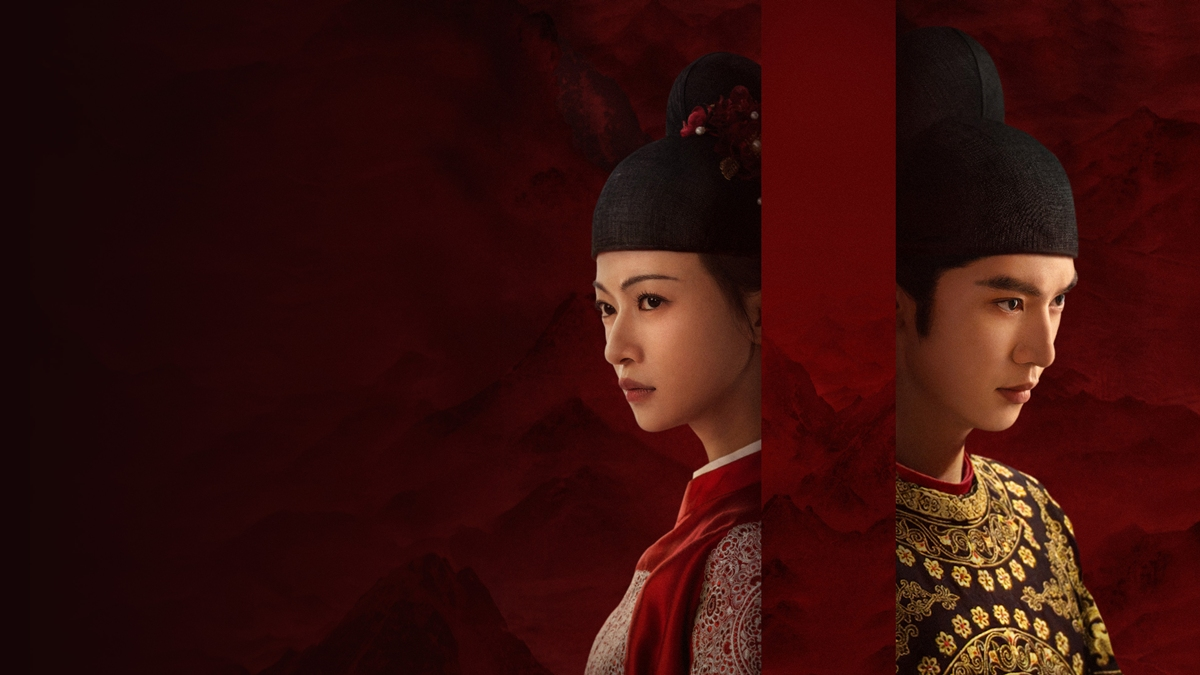
Royal Betrothal Review: A Palace Romance Worth Watching
Historical romance dramas rarely arrive without high expectations, especially when they pair two established stars with a story rooted in political intrigue. Royal Betrothal brings together Chen Zheyuan and Wu Jinyan in a palace drama where ambition, justice, and forbidden love unfold against a backdrop of corruption and power struggles.
Adapted from the novel Jiang Shan Wei Pin (The Empire as Betrothal), the series premiered on Hunan TV and Mango TV on July 28, 2026. Even before its release, the drama generated considerable buzz thanks to its respected source material, visually impressive trailers, and the long-awaited collaboration between its lead actors.
The first episodes, however, have sparked mixed reactions. While many viewers praise its grounded cinematography, natural visuals, and the chemistry between its leads, others believe inconsistent editing and uneven pacing prevent the story from reaching its full potential.
So, does Royal Betrothal deserve a place on your watchlist? Here’s our complete look at one of this summer’s most talked-about historical Chinese dramas.
🎬 Royal Betrothal Drama Details
- Title: Royal Betrothal
- Chinese Title: 御廷谣
- Genre: Historical, Romance, Political, Mystery
- Country: China
- Episodes: 32
- Release Date: July 28, 2026
- Original Network: Hunan TV, Mango TV
- Director: Zhang Yanjie
- Art Director: Lü Haojiji
- Screenwriters: Liu Tingting, Phoebe, Wang Xinyi
- Adapted From: Jiang Shan Wei Pin by Xing Yanyan
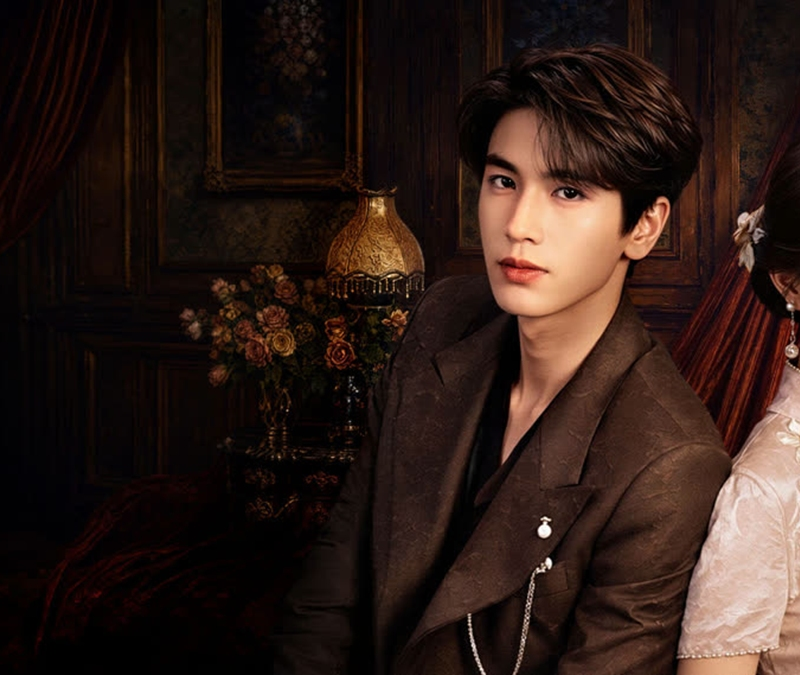
- Main Cast: Chen Zheyuan, Wu Jinyan
📖 Royal Betrothal Plot Summary
Unlike many historical romances that begin with destiny or prophecy, Royal Betrothal introduces two protagonists whose ambitions are shaped by survival rather than privilege.
Meng Tinghui ( Wu Jin Yan) is an orphan determined to escape poverty through the imperial examination. Intelligent, fearless, and unwilling to accept the limitations placed upon her, she believes knowledge—not birthright—is the only path capable of changing her future.
Her journey unexpectedly crosses with Ying Gua ( Chen Zhe Yuan ), a young emperor traveling in disguise. Although he appears calm and approachable, Ying Gua quietly carries the enormous burden of ruling a court filled with powerful officials eager to control the throne.
Their first encounter quickly evolves into an uneasy partnership.
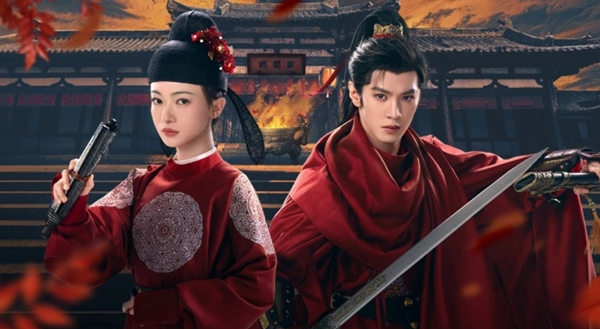
Working together, they expose corruption in Shazhou and dismantle criminal networks that have flourished under the protection of local authorities. Impressed by Meng Tinghui’s intelligence and courage, Ying Gua secretly helps her travel to the capital to pursue the imperial examination.
But entering the capital only marks the beginning of her greatest challenges.
After being falsely accused of examination fraud, Meng Tinghui must rely on her wit to prove her innocence. Her determination earns the emperor’s trust, leading to her appointment within the Chawenyuan, where she investigates corruption, uncovers hidden conspiracies, and gradually exposes the mysterious Blood Moon Society operating behind the scenes.
As political conspiracies deepen, so does the relationship between the emperor and the ambitious scholar. What begins as mutual respect slowly develops into affection, yet both understand that personal feelings may become dangerous within a court where every alliance carries political consequences.
Rather than focusing solely on palace romance, Royal Betrothal attempts to balance emotional storytelling with investigations, court politics, and questions of justice, giving the series a broader scope than many traditional historical love stories.
🎭 The Cast & Production
Chen Zheyuan Delivers a Restrained Young Emperor
Chen Zheyuan takes on one of the most challenging roles of his career as Ying Gua, a ruler forced to conceal both his intelligence and authority while carefully dismantling corruption from within.
Instead of portraying an openly commanding emperor, he builds the character through restraint. His calm expressions and measured dialogue suggest someone constantly calculating his next move, creating an emperor who prefers strategy over intimidation.
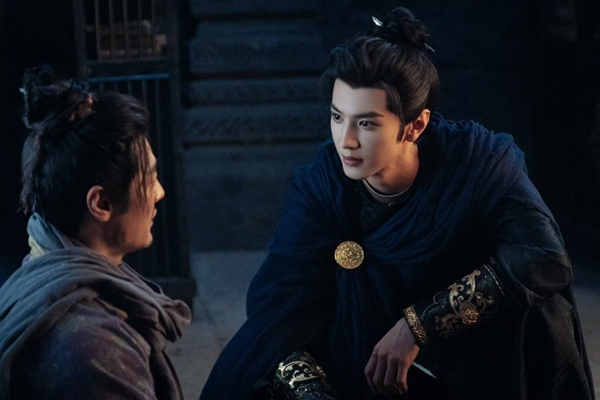
Many viewers have praised this quieter interpretation, arguing that it fits a young ruler surrounded by political enemies. Others, however, believe the performance lacks enough authority during major court scenes, making it difficult to fully accept Ying Gua as the empire’s highest power.
If you’ve enjoyed Chen Zheyuan’s growth in recent historical dramas, Royal Betrothal offers another opportunity to see him explore a more mature and politically complex character.
Wu Jinyan Once Again Excels as an Intelligent Heroine
Wu Jinyan feels completely at home in historical dramas.
As Meng Tinghui, she portrays a woman whose greatest weapon is neither beauty nor noble birth, but intelligence. Rather than waiting to be rescued, Meng repeatedly solves problems through quick thinking and determination, making her one of the drama’s strongest elements.
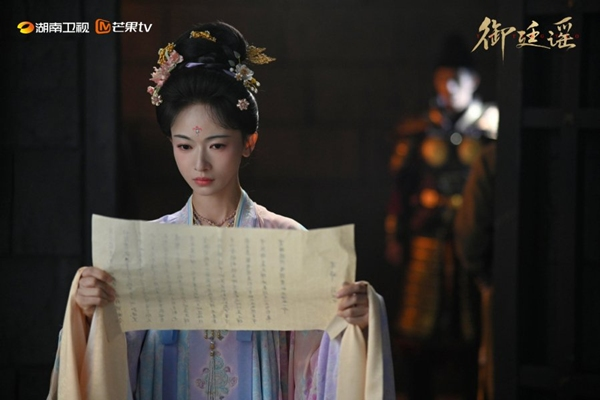
Her courtroom confrontations and investigation scenes give the story much of its momentum, while her emotional restraint prevents the romance from overshadowing her personal ambitions.
Although online discussions occasionally criticize aspects of her appearance or voice performance, most viewers agree that she remains convincing whenever the script allows her character to take control of the situation.
The Chemistry Relies on Mutual Respect
Unlike many palace romances driven by instant attraction, Royal Betrothal builds its central relationship through trust.
The emperor recognizes Meng Tinghui’s abilities long before romantic feelings emerge, while she gradually discovers the responsibility hidden beneath his gentle personality.
Their relationship feels more like a partnership than a traditional rescue fantasy, adding welcome maturity to the romance.
A Refreshingly Natural Visual Style
One aspect receiving consistent praise is the production’s visual presentation.
The series avoids excessive beauty filters and overly softened cinematography, allowing costumes, locations, and facial expressions to appear more natural than many recent costume dramas.
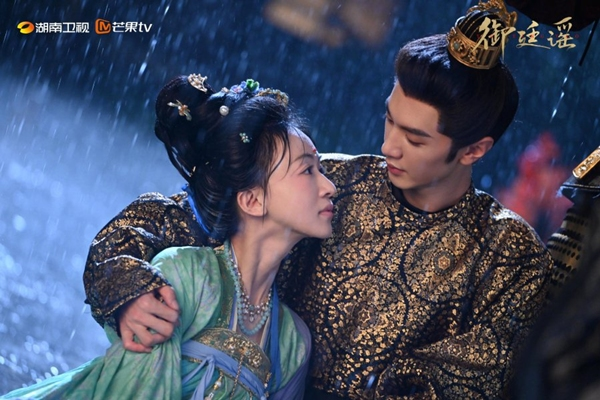
Court interiors, official robes, and battlefield sequences are all carefully designed without overwhelming the narrative, helping the world feel grounded despite its fictional setting.
At the same time, viewers have questioned several editing choices. Abrupt transitions and occasionally confusing scene progression have left some audiences struggling to follow important plot developments during the opening episodes.
⚖️ The Verdict
👍 The Praise:
The strongest feature of Royal Betrothal is its attempt to combine romance with political investigation rather than relying entirely on palace melodrama.
Wu Jinyan delivers another confident historical performance, while Chen Zheyuan presents an emperor who favors patience and intelligence over dramatic displays of power. Their relationship develops gradually, giving emotional moments greater credibility.
The production also earns praise for avoiding heavy beauty filters. The costumes, palace sets, and cinematography feel clean and cinematic, allowing performances to remain the primary focus.
Many viewers have also welcomed the drama’s emphasis on corruption investigations and court politics, which provide a stronger narrative foundation than standard romance-driven historical series.
👎 The Critique:
Not every viewer has been convinced.
The most common criticism concerns the editing. Several early episodes move between scenes so abruptly that important emotional or narrative transitions lose their impact.
Others argue that the pacing feels inconsistent, with slower character moments suddenly interrupted by rushed plot developments.
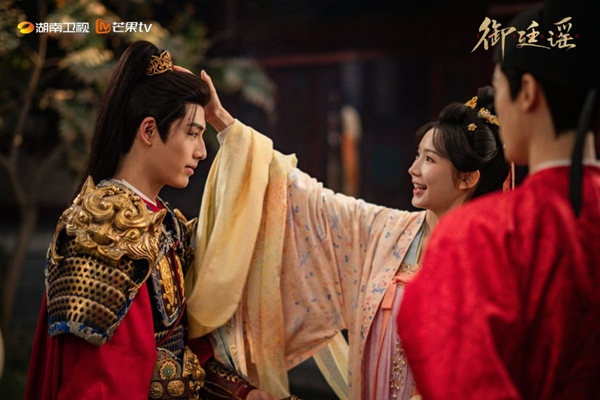
Chen Zheyuan’s portrayal of the emperor has also divided audiences. While supporters appreciate his restrained approach, critics believe his calm demeanor sometimes weakens the authority expected from an imperial ruler.
Finally, readers familiar with the original novel have questioned certain adaptation choices, feeling that parts of Meng Tinghui’s journey lose emotional depth compared to the source material.
⭐ Final Thoughts & Rating
Royal Betrothal delivers an appealing combination of political intrigue, courtroom investigations, and slow-burning romance. Its intelligent heroine, attractive production design, and natural visual style make it an enjoyable watch for fans of historical Chinese dramas.
At the same time, uneven editing and inconsistent pacing prevent the opening episodes from fully realizing the story’s potential. Whether the drama ultimately succeeds will depend on how effectively it develops its political conflicts and emotional relationships in the episodes ahead.
For viewers who enjoy palace intrigue mixed with capable protagonists and gradual romance, Royal Betrothal is certainly worth trying—even if it doesn’t reach its full potential immediately.
Rating: ⭐⭐⭐⭐☆ (4/5)
Have you started watching Royal Betrothal? Do you think its political storyline stands out from other historical C-dramas, or has the editing kept you from fully enjoying it? Share your thoughts in the comments below!
Now past ep 13, I agree that the editing is a problem as described. There are no signs of improvement on that front. Starting with ep 12, the drama density suddenly picks up intensely, but the narrative is not really consistent, and the building of the relationship between Meng Tinghui and the Emperor isn’t either. I am afraid that from now on, the lead actors have to play against a not well-thought-out script. They are trying their best, that is noticeable. But both characters, Meng Tinghui and the Emperor, don’t seem to be well-designed in the script. Let’s hope that won’t drag the rest of the series down. Otherwise, the cast are performing quite well within the limits set by the production.
Watched through the end. It is a very mixed bag. Like many C palace dramas, it starts out strong, but rapidly loses narrative steam. Compared with the other recent dramas with WJY as female lead that follows a similar narrative arc, The Double (better) and Kill Me Love Me (worse), Royal Betrothal is somewhat in the middle, with tendency towards worse. Good things first: The child actress playing Meng Tinghui as a girl steals the show. And what little room the script leaves for the role of Yan Fuzhi beyond a comic relief sidekick, Zhao Zhaoyi makes use of it all. Otherwise, the role of Meng Tinghui is overly similar to WJY’s previous roles in The Double and KMLM. But to make things worse, her character keeps being constantly undermined by the script. One of the worst decisions of the scriptwriters is that Meng Tinghui learns of her real identity as Murong Yao only when 90% of the show have already passend. The character cannot meaningfully develop with her new identity,and this is a central reason, though not the only one, for the ending of the show stalling into a complete mess. There are other problems as well which are among those notorious for C palace Dramas, and almost none have been left out. The show has a few good scenes and may be worth watching once, but for me, its rewatching value is around zero. Much in contrast to The Double, let alone Yanxi Palace.