Whispers of Fate: A Dark and Poetic Xuanxia Drama
Whispers of Fate review explores a visually rich xuanxia drama that goes beyond classic wuxia storytelling. Blending fantasy, martial arts, and emotional depth, the series focuses on obsession, fate, and personal sacrifice within a poetic Eastern world shaped by destiny and inner conflict.
Unlike traditional wuxia dramas that revolve around clear-cut conflicts between good and evil, Whispers of Fate takes a bold step forward by redefining the genre through the lens of xuanxia. Adapted from Teng Ping’s classic novel Qian Jie Mei, the drama blends mystical storytelling with deep psychological exploration.

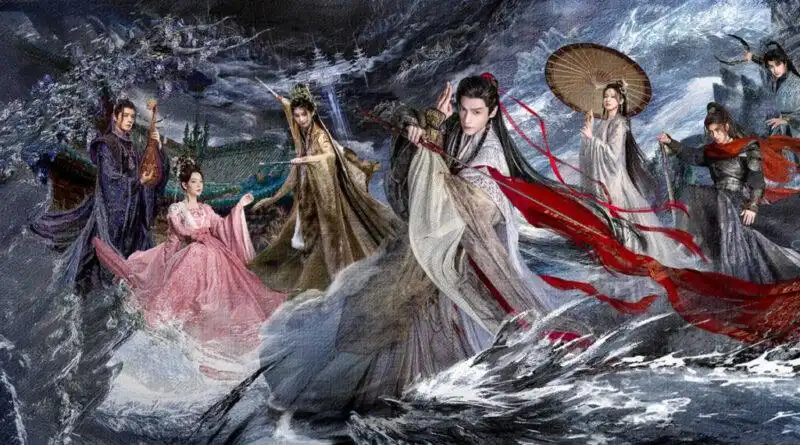
With its striking Eastern aesthetics inspired by Dunhuang murals and Sanxingdui patterns, along with cinematic-level visual effects, the series delivers more than spectacle. At its core, Whispers of Fate is a philosophical story about emotional attachment, inner struggle, and the price of destiny.
A Visually Rich and Symbolic Wuxia World
The world-building in Whispers of Fate is both detailed and intentional. Each sect is designed with strong cultural symbolism, moving beyond conventional martial arts settings.
Golden Leaf Temple draws inspiration from ancient temples like Tanzhe Temple, where falling ginkgo leaves create a meditative atmosphere. Wanqiao Pavilion borrows visual elements from The Goddess of the Luo River, combined with Sui and Tang dynasty architectural styles, giving it an ethereal presence above water. Meanwhile, Biluo Palace reflects the solemn grandeur of ancient Han stone palaces, evoking a mysterious and sacred aura.

Visually, the drama fully embraces traditional Chinese aesthetics. Fight scenes feel poetic rather than chaotic, with suspended water droplets, ink-like blood splashes, and long takes that resemble flowing calligraphy. Costumes play a crucial role as well. Over 800 handcrafted outfits incorporate patterns from the Shang, Zhou, and Ming dynasties, while accessories subtly reference intangible cultural heritage. Tang Lici’s signature weapon, inspired by the image of a “white fox transforming into a dragon,” foreshadows his fate of sacrifice and protection.
Tang Lici and the Burden of Emotional Obsession
What truly sets Whispers of Fate apart is its focus on emotional obsession as the root of human suffering. The protagonist, Tang Lici, begins as a detached, god-like figure untouched by emotion. However, after experiencing human warmth, he falls into the mortal world and becomes entangled in its pain.
Luo Yunxi delivers a nuanced performance, capturing Tang Lici’s inner conflict with remarkable depth. The character balances cunning charm with unmatched pride, appearing cold on the surface while silently carrying the weight of the world. His suffering stems from the fracture between divinity and humanity. Compassion, attachment, and regret slowly crack the rigid order he once embodied.

This internal struggle is mirrored by other characters. Xifang Tao (Sebrina Chen), once fully human, is reduced to a lifeless puppet deprived even of pain. Ghost Peony, on the other hand, rejects emotion entirely, only to become imprisoned by her own emotional void. The drama avoids simple moral binaries and instead reveals a harsh truth: whether emotional or emotionless, obsession in any form leads to destruction.
A Strong Ensemble That Feels Human and Real
The supporting cast adds warmth and emotional weight to the narrative. Liu Yan’s (Alen Fang) descent from a gentle senior disciple into a dark pipa-playing figure is driven by misunderstanding and grief rather than pure malice. His eventual sacrifice brings a tragic sense of redemption.
Chi Yun (Ao Zi Yi), Tang Lici’s closest ally, chooses loyalty over glory, trusting his friend without blind obedience. Puzhu, a former crown prince, is torn between righteousness and personal desire, especially through his complicated relationship with Xifang Tao.
Even minor characters leave an impression. A jade bracelet merchant’s opportunism and Yu Furen’s hidden kindness beneath arrogance help create a living, breathing martial world. These characters are not symbols of good or evil but individuals shaped by pain, choice, and belief.
Flaws That Do Not Overshadow Its Strengths
Despite its ambition, Whispers of Fate is not without flaws. The latter half of the series suffers from uneven pacing, and some subplots feel rushed. Certain narrative choices, such as fake deaths and antagonist redemption arcs, have sparked debate and weakened earlier logical build-up.
At times, the emphasis on visual spectacle overshadows narrative depth. However, these issues do not erase the drama’s greatest strength: its ability to reflect modern emotional struggles through a fantastical lens.
Why Whispers of Fate Still Matters
Tang Lici’s defiance of fate mirrors the inner battles many face in real life. Like him, people are often trapped by expectations, past trauma, and unfulfilled desires. The drama does not offer a simplistic message of “letting go.” Instead, it suggests that true liberation comes from understanding obsession and still choosing kindness, responsibility, and courage.
In the end, Whispers of Fate review proves that wuxia is far from outdated. With a strong spiritual core and innovative storytelling, it offers both visual splendor and emotional depth. As Tang Lici fades into the misty rivers and mountains, one truth becomes clear: heroism is not about invincibility, but about choosing goodness after seeing the world as it truly is.