Generation to Generation (2026) Wuxia Drama: Plot & Cast
A new historical wuxia drama has entered the spotlight. This detailed review of Generation to Generation explores the plot, characters, strengths, weaknesses, and audience reactions surrounding the 37-episode wuxia drama. Generation to Generation blends romance, sect rivalries, and layered world-building into a story driven by destiny and emotional conflict. Starring Zhou Yiran and Bao Shangen, the series explores a tension-filled relationship set against a morally complex Jianghu landscape.
With 37 episodes, the drama unfolds gradually, introducing multiple factions, generational conflicts, and hidden identities. While early reactions have been mixed, the series continues to spark discussion for its ambitious narrative structure and compelling lead performances.
Drama Details
- Title: Generation to Generation
- Genre: Historical, Wuxia, Romance, Martial Arts
- Episodes: 37
- Episode Runtime: Approximately 45 minutes
- Starring: Zhou Yiran, Bao Shangen
- Special Appearance: Li Yunrui
- Streaming Platforms: iQiyi, Tencent Video
- Based on: The novel Ten Years Lantern on a Stormy Martial Arts World Night by Guan Xin Ze Luan
Generation to Generation (2026) Plot Summary
Adapted from Guan Xin Ze Luan’s novel, Generation to Generation centers on a relationship shaped by secrecy, ideological tension, and fate.
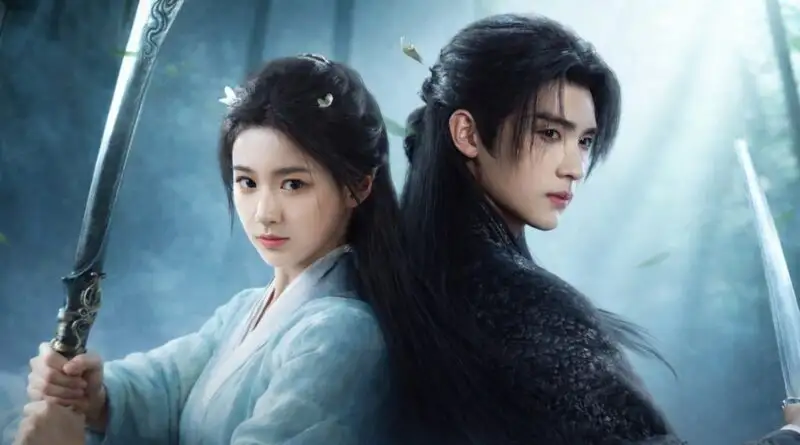
Zhou Yiran plays Mu Qingyan, a calculating and sharp-minded young sect leader living under a concealed identity. Beneath his composed exterior lies a history marked by trauma, revenge, and long-term ambition. Opposite him stands Cai Zhao, portrayed by Bao Shangen — a seemingly carefree yet quietly resolute heroine whose destiny carries the ominous possibility of “falling into darkness.”

Their dynamic is built on contrast. Mu Qingyan operates with restraint and strategic precision, while Cai Zhao combines emotional openness with inner strength. As sect rivalries intensify and hidden agendas surface, their relationship evolves from cautious suspicion to emotional vulnerability.
Rather than relying on traditional hero-saves-heroine conventions, Generation to Generation presents two equally strong leads. Their emotional push-and-pull unfolds alongside political intrigue, betrayals, and shifting alliances, creating a romance that feels both tender and devastating.
Early Episode Confusion and Narrative Structure
One of the most discussed aspects of Generation to Generation is its opening arc. The first three episodes introduce numerous sects, disciples, and backstories in rapid succession. For some viewers, this created a sense of narrative overload.
Scene transitions occasionally shift abruptly between timeframes and locations, which may disrupt flow for those expecting a more linear structure. The use of atmospheric establishing shots enhances visual mood but can also contribute to pacing inconsistencies in early episodes.

However, others view the initial confusion as a byproduct of ambitious world-building rather than structural weakness. The series spans multiple sects, generational tensions, and interconnected character arcs. Viewers who revisited the early episodes often found that plot threads became clearer with context.
Many suggest that the story begins to fully connect around episodes five to seven, when character motivations and sect conflicts start aligning more cohesively.
A Narrative That Avoids Over-Explanation
Unlike some historical dramas that rely heavily on internal monologue and overt exposition, Generation to Generation largely allows its plot to unfold organically. Explanatory narration is minimal, and character motivations are revealed gradually.
This storytelling approach places responsibility on the audience to pay attention to details. While the density of information may initially feel overwhelming, the layered structure rewards close viewing. The unfolding mystery gains impact precisely because it avoids excessive exposition.
Generation to Generation Chinese Drama Cast
Zhou Yi Ran and Bao Shang En
Despite debates over pacing, the performances of Zhou Yiran and Bao Shangen remain widely praised.

Bao Shangen’s portrayal of Cai Zhao demonstrates that a heroine can embody softness and femininity while remaining formidable in martial arts. Her performance balances vulnerability with quiet resilience.

Zhou Yiran’s Mu Qingyan leans into a darker, more obsessive interpretation of the male lead. His restrained intensity and emotional volatility add depth to the character’s internal conflict. Together, the leads anchor the drama and maintain emotional investment even when the narrative grows complex.
Audience Reactions: Divided but Engaged
While Generation to Generation has drawn attention for its cast and visual ambition, audience feedback has been notably divided.
Some viewers have criticized the drama’s action choreography, noting that fight sequences feel repetitive and lack the fluid martial arts intensity expected from the wuxia genre. Slow-motion close-ups and limited combat design have been described as diminishing the immersive experience.
Others point to pacing concerns, suggesting that early episodes feel stretched while certain narrative threads remain underdeveloped. The political intrigue and power struggle arcs, in particular, are seen by some as lacking depth, with antagonist motivations appearing underexplored.

Character development has also sparked debate. A portion of the audience feels that certain roles lean toward archetypal portrayals rather than nuanced complexity, making it easier to predict alignments early on.
However, even critical viewers acknowledge that Zhou Yiran and Bao Shangen deliver visually compelling performances. Many believe their on-screen chemistry remains one of the strongest aspects of the series, with some commenting that the pairing might shine even brighter in a modern romance setting.
Where to Watch Generation to Generation
Generation to Generation is available for streaming on iQiyi and Tencent Video, with subtitle availability depending on region.
Is Generation to Generation Worth Watching?
Generation to Generation is not a casual, background-friendly drama. Its layered world-building, generational conflicts, and morally complex characters require attention. While its pacing and structure may challenge some viewers, the emotional depth and lead performances provide compelling reasons to continue.
For audiences seeking a wuxia series that blends romance, political tension, and identity-driven storytelling, Generation to Generation offers an ambitious, discussion-worthy entry into the genre.
Overall, this review highlights both the strengths and structural challenges of Generation to Generation, offering a balanced look at its ambitious storytelling.
For more historical C-drama coverage, explore our latest reviews and drama guides.